


New Study Bibles
CSB Ancient Faith Study Bible – Holman Handcrafted Collection Black Premium Goatskin Leather
$179.95


Bible Journey
How We Got the Bible:
From the Original Writings to the English King James Version
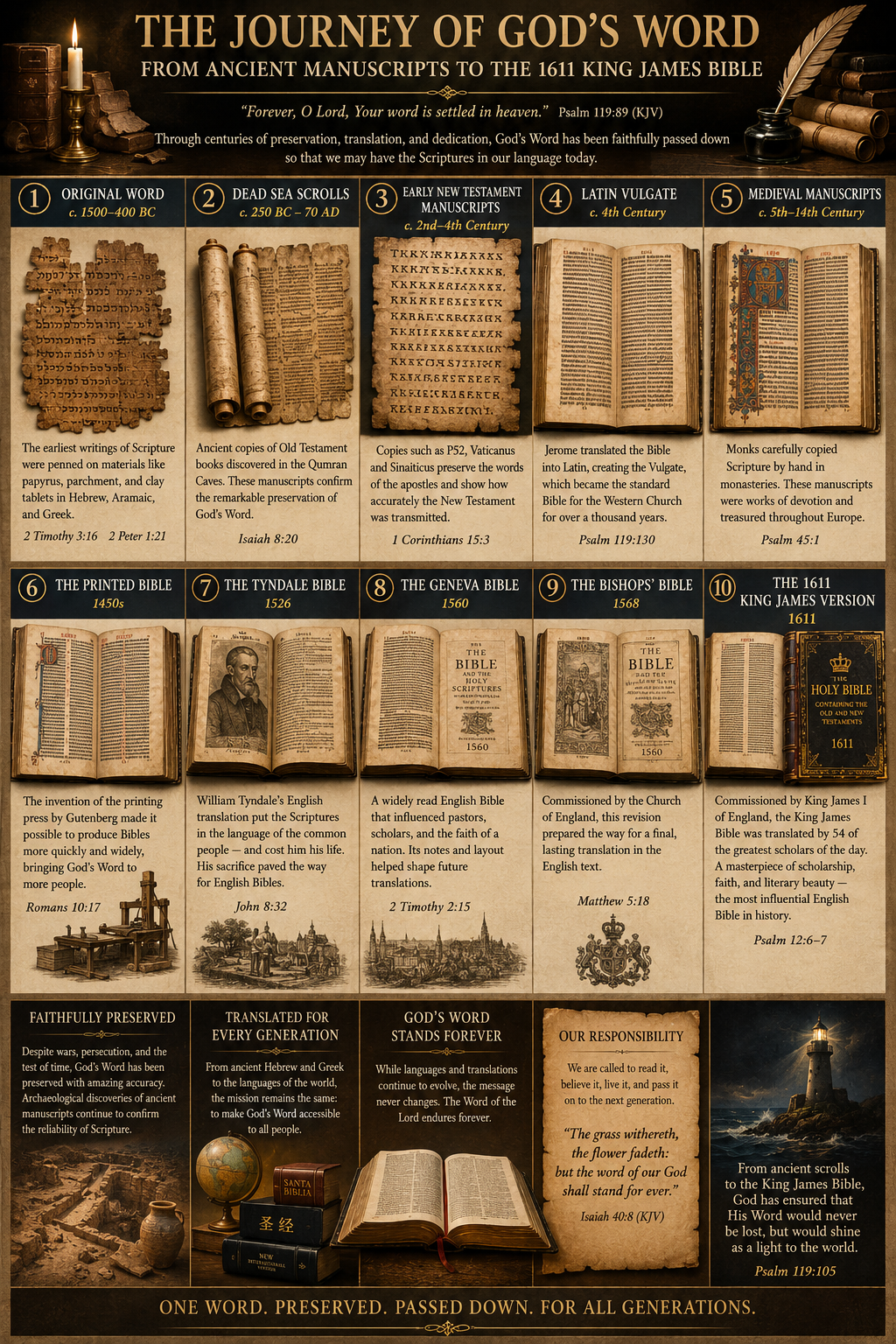
The Bible is unlike any other book in history. Written over a period of approximately 1,500 years by more than forty authors from diverse backgrounds—including kings, prophets, shepherds, fishermen, physicians, and apostles—it tells one unified story of God's relationship with humanity and His plan of redemption through Jesus Christ. Yet the Bible we hold today is not the original handwritten manuscripts. Instead, it is the result of God's faithful preservation of His Word through generations of scribes, translators, and scholars. The journey from the original Hebrew and Greek writings to the English King James Version (KJV) is one of remarkable dedication, careful scholarship, and divine providence.
God's Inspired Word
The Bible begins with divine inspiration. According to 2 Timothy 3:16, "All scripture is given by inspiration of God." The writers of Scripture did not merely record their own thoughts; they wrote as they were guided by the Holy Spirit.
The Old Testament was written primarily in Hebrew, with small portions in Aramaic. Moses wrote the first five books of the Bible around 1400 B.C., while prophets such as Isaiah, Jeremiah, Ezekiel, Daniel, and others continued recording God's revelation over the centuries. The final books of the Old Testament were completed around 400 B.C.
The New Testament was written between approximately A.D. 45 and A.D. 95. These twenty-seven books were written in Koine Greek, the common language of the Roman Empire. The apostles and their companions recorded the life of Jesus Christ, the growth of the early church, and God's continuing revelation to His people.
Preserving the Scriptures
Long before the invention of the printing press, every copy of the Bible had to be written by hand. Jewish scribes devoted themselves to preserving the Old Testament with extraordinary precision. Every letter, word, and line was carefully counted and checked. If even a single serious mistake was found, an entire manuscript could be rejected.
The Masoretes, Jewish scholars who worked between the sixth and tenth centuries A.D., continued this careful tradition. Their work produced what is known as the Masoretic Text, which became the standard Hebrew text used by many Bible translators.
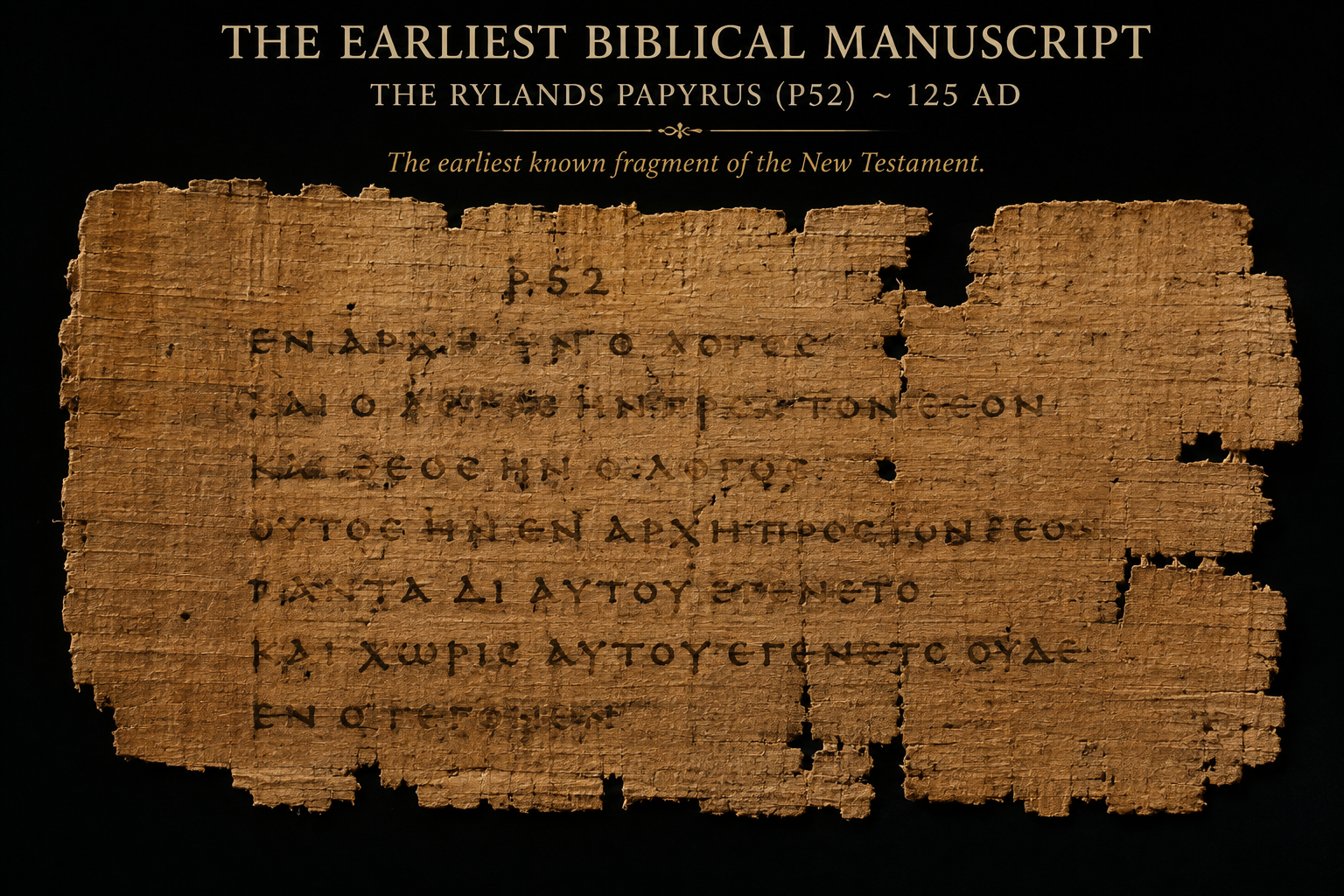
The New Testament was copied by Christian scribes who faithfully reproduced the writings of the apostles. Although minor copying variations naturally occurred over time, the vast number of surviving manuscripts allows scholars to compare thousands of copies and identify these differences with remarkable confidence. The essential teachings of Christianity remain consistent throughout these manuscripts.
Ancient Bible Translations
As God's Word spread beyond Israel, translations became necessary for people who no longer spoke Hebrew.
Around the third century B.C., Jewish scholars translated the Hebrew Scriptures into Greek. This translation became known as the Septuagint and was widely used throughout the Greek-speaking world. Many New Testament writers quoted from the Septuagint, demonstrating its importance during the time of Jesus and the apostles.
Around A.D. 382, Jerome translated the Bible into Latin, producing the Latin Vulgate. For more than one thousand years, it served as the primary Bible of Western Christianity. However, because Latin eventually became a language understood mainly by clergy and scholars, many ordinary people could no longer read God's Word for themselves.
Early English Bibles
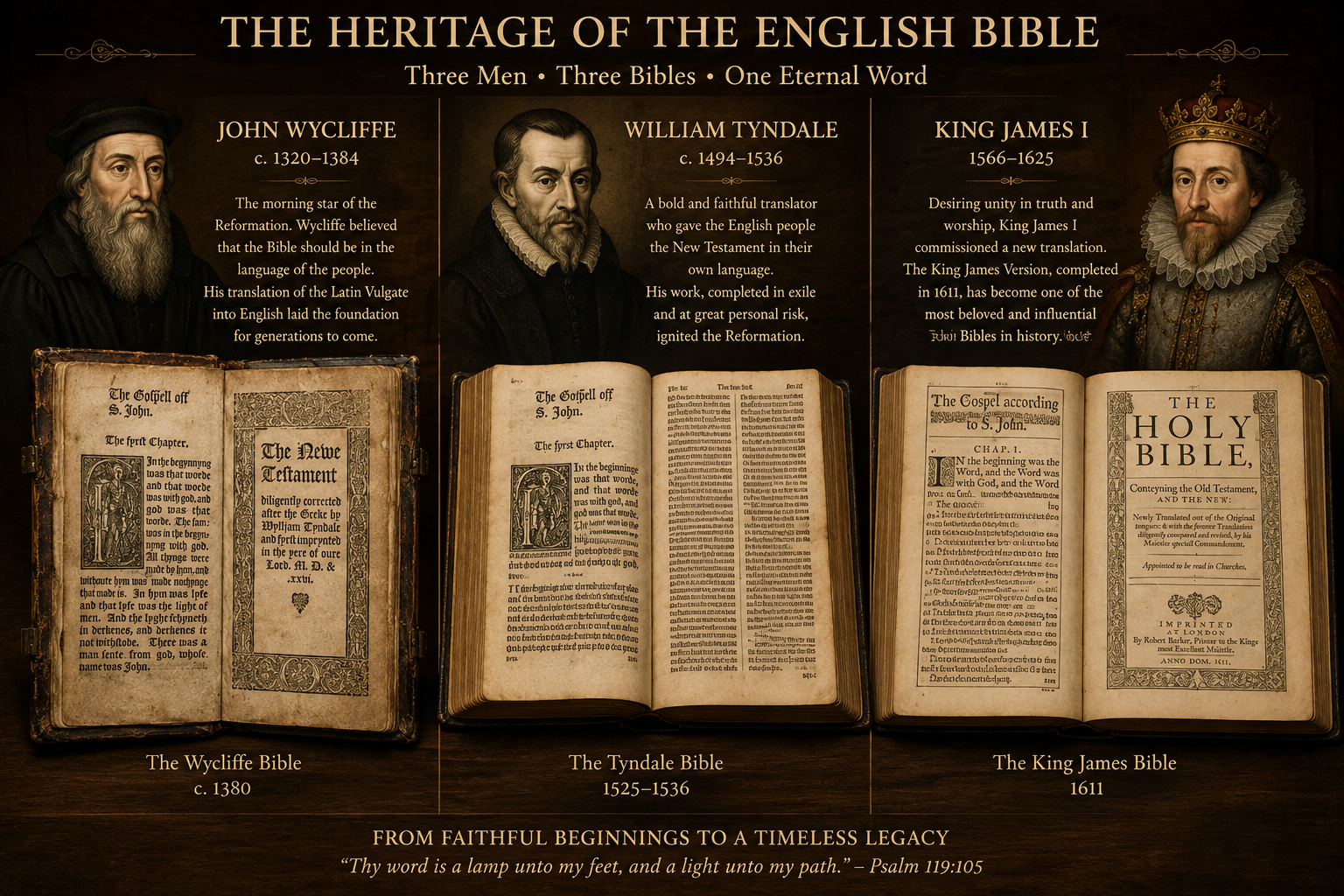
By the late Middle Ages, many Christians longed to read the Scriptures in their own language.
The John Wycliffe Bible
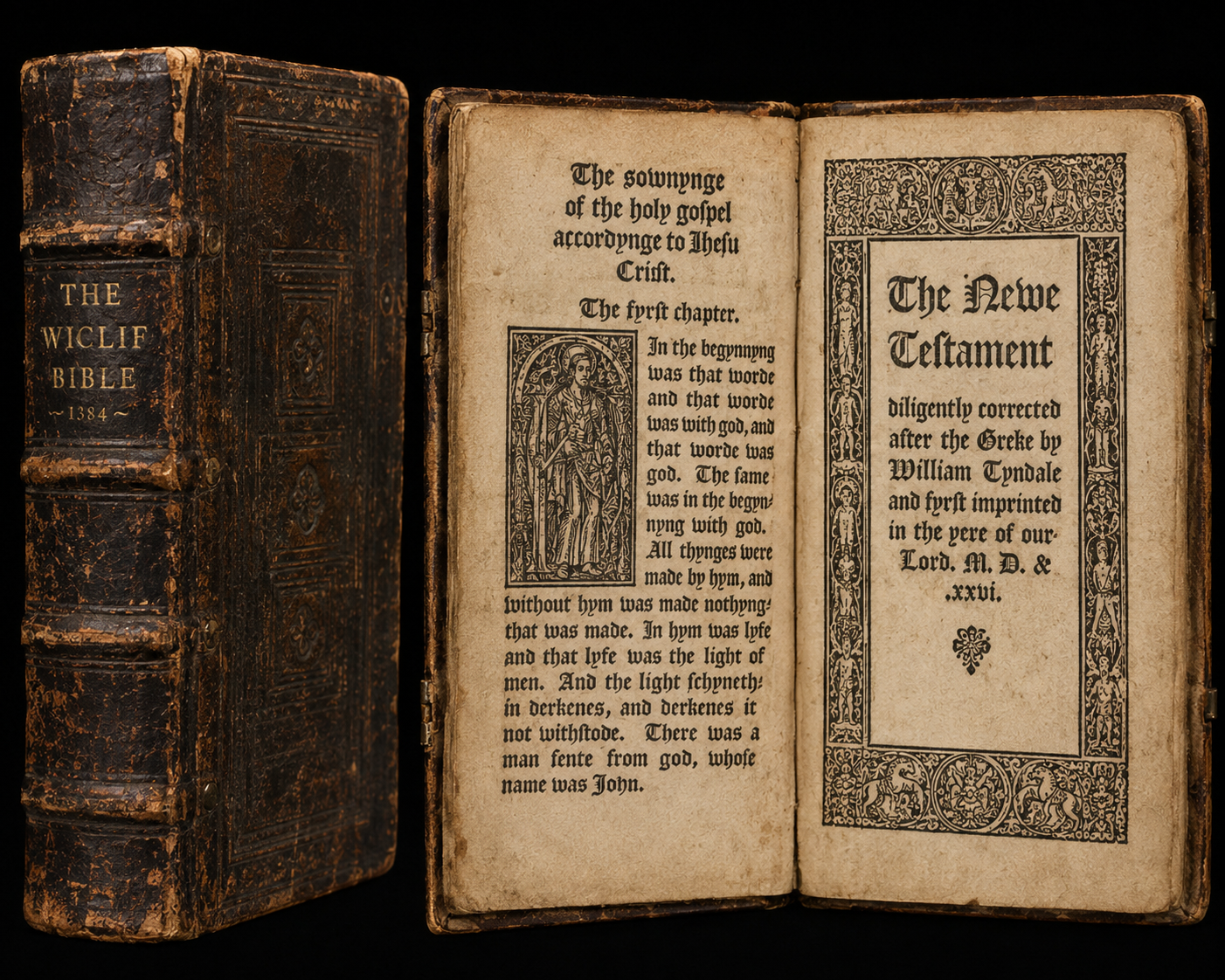
John Wycliffe, often called the "Morning Star of the Reformation," led the effort to produce the first complete English Bible during the late 1300s. Since he translated from the Latin Vulgate, his work reflected the manuscripts available at that time. Although handwritten copies circulated widely, church authorities opposed the translation because they feared ordinary people reading the Bible without official interpretation.
The William Tyndale Bible
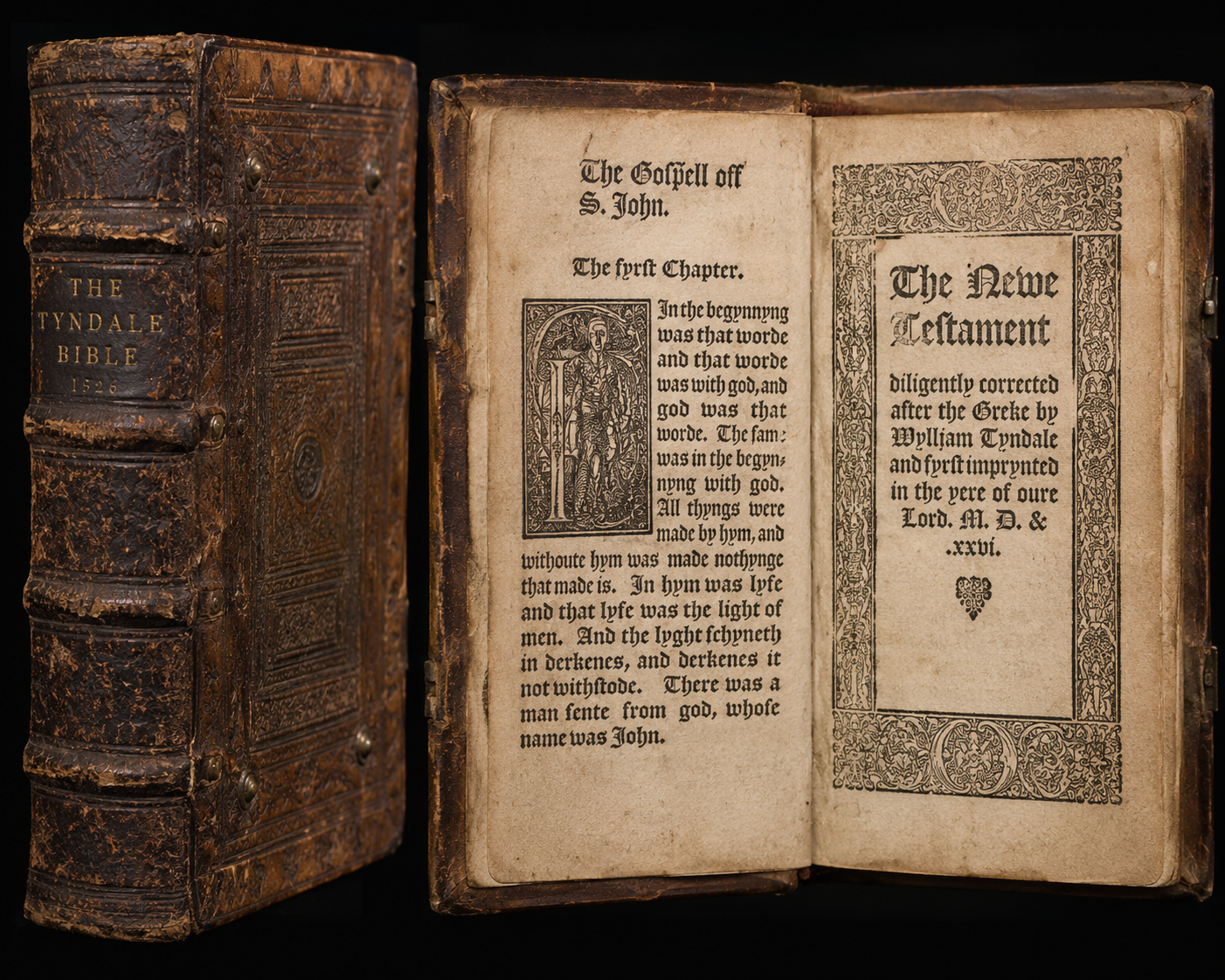
More than a century later, William Tyndale changed the course of Bible history forever. Determined to give the English people the Scriptures in their own language, Tyndale translated directly from the original Hebrew and Greek texts rather than from Latin. His famous desire was that even "the boy that driveth the plow" would know the Scriptures.
Because Bible translation into English was forbidden in many places, Tyndale worked in exile. His New Testament was secretly printed and smuggled into England. Eventually he was arrested, imprisoned, and executed in 1536. His final reported prayer was, "Lord, open the King of England's eyes."
Much of Tyndale's beautiful and accurate wording was later incorporated into the King James Version. In fact, many familiar phrases in the KJV originated with his translation.
The Printing Press
One of the greatest advances in spreading God's Word came through Johannes Gutenberg's invention of the movable-type printing press around 1455.
Before printing, producing a single Bible required months or even years of careful hand copying. Printing allowed thousands of identical copies to be produced quickly and accurately. As literacy increased, ordinary families gained access to the Scriptures, fueling the Protestant Reformation and encouraging personal Bible study throughout Europe.
The Road to the King James Version
Following Tyndale's work, several important English translations appeared, including the Coverdale Bible, the Matthew Bible, the Great Bible, the Geneva Bible, and the Bishops' Bible. Each contributed to improving English Bible translation and preparing the way for what would become the King James Version.
In 1604, King James I of England authorized a new translation to unite English-speaking Christians around a single Bible. Nearly fifty scholars, divided into six translation companies located at Oxford, Cambridge, and Westminster, undertook the work.
These scholars carefully examined the available Hebrew and Greek manuscripts while consulting earlier English translations. Their goal was accuracy, faithfulness to the original languages, and literary excellence. Every section underwent multiple reviews before the translation was approved.
After seven years of diligent work, the King James Version was published in 1611.
Influence of the King James Bible 1611
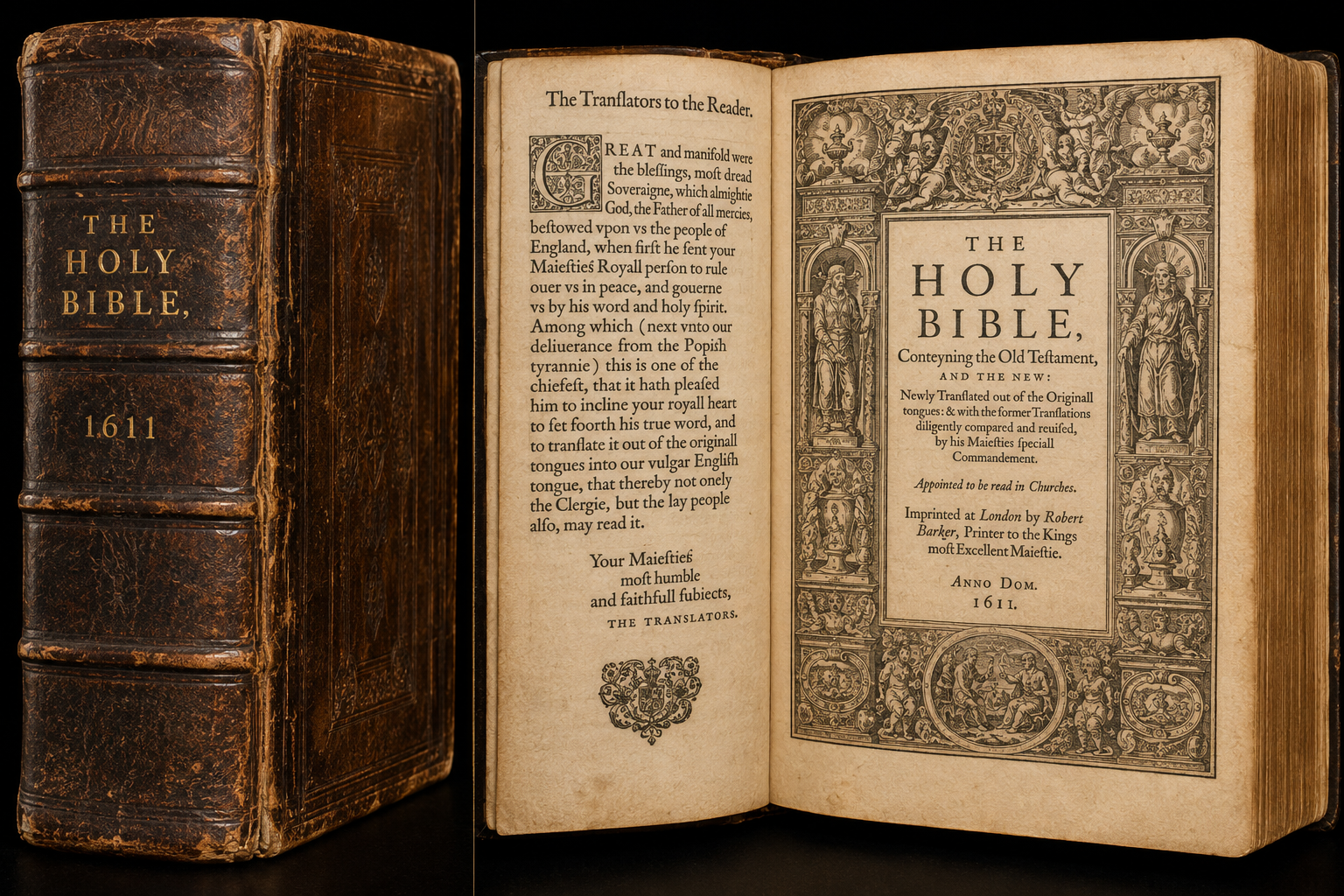
The King James Version quickly became one of the most influential books in the English language. Its majestic style, poetic beauty, and careful scholarship shaped not only Christian worship but also English literature, education, law, and public life.
For more than four hundred years, the KJV has been read in churches, homes, and mission fields around the world. Its memorable language has inspired countless sermons, hymns, books, and personal devotions. While many reliable English translations exist today, the King James Version continues to hold a special place in the hearts of millions of believers.
Preserving God's Heritage
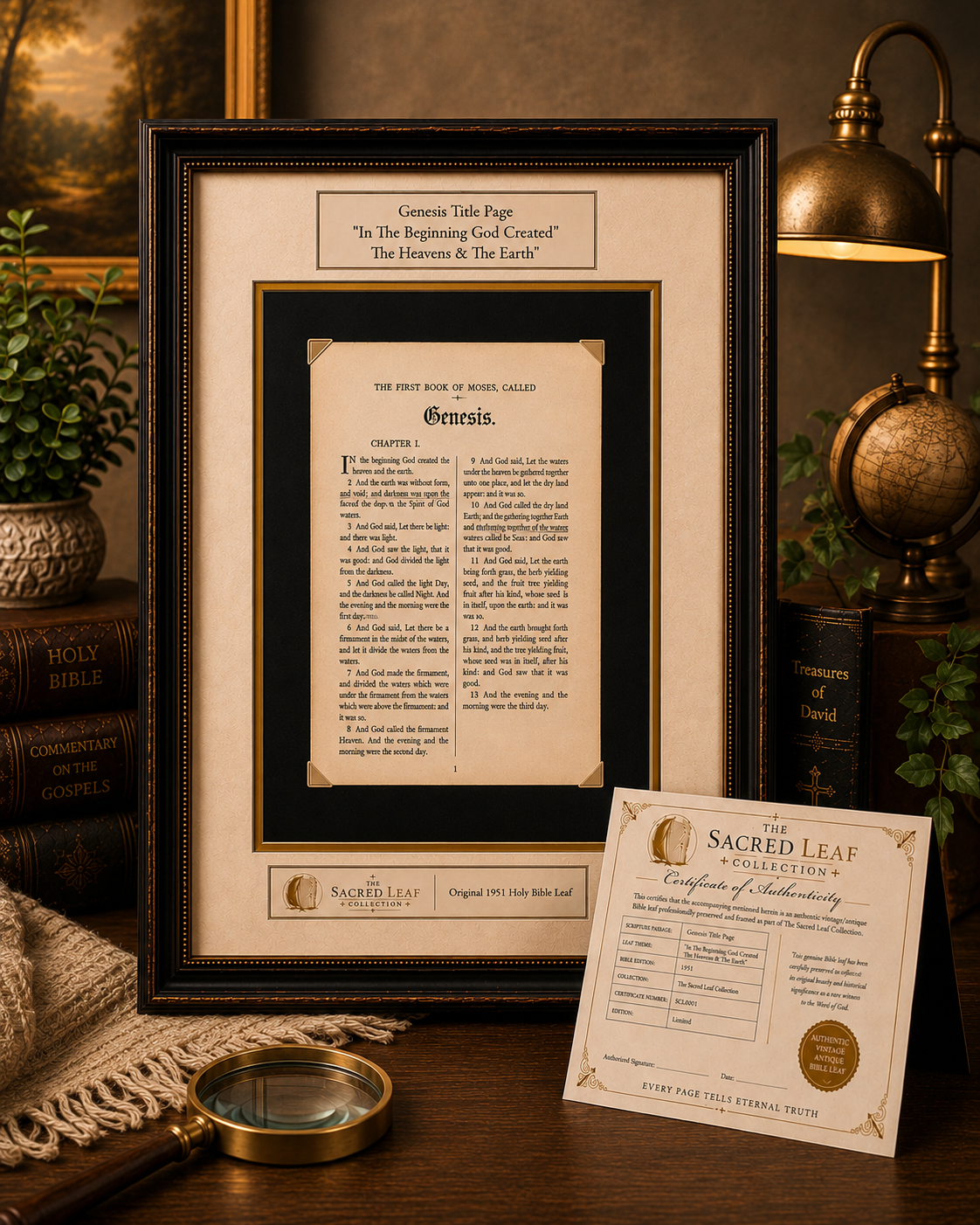
At The Sacred Leaf Collection, every authentic vintage and antique Bible page represents more than ink on paper. Each preserved leaf is part of this extraordinary history—a testimony to centuries of faithful preservation, careful craftsmanship, and unwavering devotion to God's Word.
When you display an authentic Bible page in your home or office, you are preserving a small piece of biblical history. These pages remind us that through wars, persecution, changing kingdoms, technological advances, and countless generations, God's Word has endured exactly as He promised.
The prophet Isaiah declared, "The grass withereth, the flower fadeth: but the word of our God shall stand for ever" (Isaiah 40:8). That promise has proven true throughout history. From the original Hebrew and Greek manuscripts to the beloved English King James Version, the Bible continues to transform lives and proclaim the eternal truth of God's salvation through Jesus Christ. Every preserved Bible leaf serves as a beautiful reminder that while generations pass away, the Word of God remains forever.


